

The journey from a mere idea to a market-dominating product is complex, challenging, and profoundly rewarding. For entrepreneurs, innovators, and businesses looking to drive significant revenue—especially through avenues like Google AdSense and sustained organic search traffic—understanding and meticulously executing the product development lifecycle is paramount. This article serves as your comprehensive guide, detailing the critical, SEO-optimized steps necessary to transition your initial concept into a finished, groundbreaking product that resonates deeply with your target market and captures significant online visibility.
Conceptualization and Rigorous Validation
Every successful product begins with a powerful concept designed to solve a genuine problem or satisfy an unmet need. However, countless brilliant ideas fail due to a lack of rigorous market validation. This initial phase is about more than just brainstorming; it’s about conducting in-depth research to prove your idea’s viability and identify the precise keywords your future customers are using.
A. Idea Generation and Opportunity Mapping
The starting point is identifying the “pain points” of your potential users. A product’s true value lies in its ability to offer a superior solution.
- A. Problem Definition: Clearly articulate the specific problem you are solving. Is the issue widespread? How significant is the impact on the user? A focused problem leads to a focused solution.
- B. Solution Brainstorming: Generate multiple potential solutions for the defined problem. Don’t limit yourself to the first idea. Explore radical and incremental innovations.
- C. Competitive Analysis: Scrutinize existing solutions. Who are your competitors? What are their strengths, weaknesses, opportunities, and threats (SWOT)? Look for the gaps they have left unaddressed—these are your prime opportunities.
- D. Unique Value Proposition (UVP): Define what makes your product uniquely better. This UVP must be clear, concise, and compelling. It will form the core of all future marketing and product messaging.
B. Deep Market Research and Keyword Strategy
For an article focused on maximizing Google AdSense revenue and SEO, this step is absolutely critical. You need to know not only if people want your product, but what they search for when looking for a solution.
- A. Identifying Target Audience: Create detailed buyer personas. Understand their demographics, psychographics, online behavior, and, most importantly, their search intent.
- B. High-Value Keyword Research: Use professional tools to find keywords related to your problem and proposed solution. Focus on long-tail keywords (e.g., “best lightweight travel laptop with long battery life” instead of just “laptop”). These often have lower competition and higher conversion rates, driving more qualified traffic to your site.
- C. Search Volume and Difficulty Analysis: Select keywords with a healthy balance of search volume (to ensure traffic) and low difficulty (to ensure you can rank). Incorporate these high-intent terms naturally into your product and content strategy.
- D. Validation Surveys and Interviews: Conduct surveys and one-on-one interviews with your target audience. Ask open-ended questions to validate the problem, gauge interest in your proposed solution, and uncover any previously unknown needs.
Designing the Blueprint and Prototyping
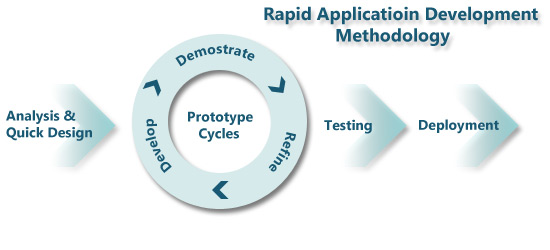
With a validated concept and a clear keyword strategy, the focus shifts to translating the idea into a tangible blueprint. This phase emphasizes efficiency and learning through iterative development.
A. Defining Product Specifications and Features
A successful product avoids “feature creep” by focusing only on the elements that deliver the core UVP.
- A. Core Feature Prioritization: Determine the minimal set of features required to solve the primary problem. Use frameworks like MoSCoW (Must-have, Should-have, Could-have, Won’t-have) to prioritize.
- B. User Experience (UX) and Interface (UI) Design: Create wireframes and mockups. The design must be intuitive, easy to use, and align with the expectations of your target audience. A smooth user journey is essential for customer retention and positive word-of-mouth.
- C. Technical Requirements and Stack: Define the necessary technologies, infrastructure, and resources needed to build the product. This ensures feasibility and scalability.
- D. Documentation: Create detailed product requirement documents (PRDs) and technical specifications. Clear documentation minimizes miscommunication and accelerates the development process.
B. The Minimum Viable Product (MVP) Strategy
The Minimum Viable Product (MVP) is the most crucial learning tool. It is not a fully-featured product but the smallest version that delivers value to early users, allowing you to Build, Measure, Learn rapidly.
- A. Developing the Core MVP: Focus exclusively on building the features prioritized in the ‘Must-have’ category. Speed to market is more valuable at this stage than perfection.
- B. Launch to Early Adopters: Release the MVP to a small group of users (early adopters or beta testers) who are willing to overlook minor flaws in exchange for early access to a solution for their pain point.
- C. Data Collection and Analytics: Implement robust analytics tools (like Google Analytics and other product usage tracking software) to measure key performance indicators (KPIs). Track user engagement, feature usage, and churn rate.
- D. Gathering Qualitative Feedback: Actively solicit feedback through surveys, in-app prompts, and direct interviews. This qualitative data explains why the quantitative data looks the way it does. The MVP phase is a cycle of rapid iteration, not a one-time launch.
Development, Testing, and Commercialization
Once the MVP is validated and refined, the product moves into full development and preparation for a large-scale commercial launch. This phase demands rigorous quality control and a coordinated Go-To-Market strategy.

A. Full-Scale Product Development and Quality Assurance
Scalability, security, and stability become the top priorities during full development.
- A. Agile Development Sprints: Utilize an agile methodology (like Scrum or Kanban) to maintain iterative development, manage scope, and adapt quickly to emerging needs.
- B. Comprehensive Testing: Implement multiple testing stages:
- Bugs and Functionality Testing (QA): Ensure the product works as designed across all platforms and devices.
- User Acceptance Testing (UAT): A final round of testing with a broader group of real-world users to confirm the product meets all specified business requirements.
- Performance and Security Testing: Stress-test the product to ensure it can handle expected load and is secure against vulnerabilities.
- C. Pre-Launch Optimization: Finalize all on-page SEO elements for the product landing pages, including meta titles, descriptions, image alt text, and internal linking structure. Ensure your site speed is lightning-fast, as this is a major ranking factor.
B. The Go-To-Market (GTM) Strategy and Product Launch
A well-executed launch plan creates initial momentum and organic buzz, which search engines appreciate.
- A. Content Strategy Execution: Publish high-quality, long-form content (like this article) that targets the high-value, long-tail keywords identified earlier. Create detailed tutorials, case studies, and comparison articles that position your product as the superior solution. Content is your primary, long-term SEO engine.
- B. Launch Day Mechanics: Coordinate marketing, sales, and PR efforts. This may involve a press release, targeted paid advertising (Google Ads is excellent for capturing high-intent traffic), and a coordinated social media campaign.
- C. Securing Backlinks: Outreach to authoritative industry websites and journalists. High-quality backlinks are one of the most powerful SEO signals, boosting your article’s authority and helping your product pages rank faster.
- D. Customer Service Readiness: Ensure support channels are fully operational, and staff are trained to handle initial inquiries and feedback. A smooth post-launch experience is vital for sustained growth and positive reviews.
C. Post-Launch Analysis and Iteration
The product journey doesn’t end at launch; it’s merely the beginning of the growth phase.
- A. Monitoring Key Metrics: Continuously track user behavior, sales conversion rates, AdSense performance (CPC and CTR for your keywords), and organic search rankings.
- B. Gathering Reviews and Testimonials: Actively encourage satisfied customers to leave reviews on your site and third-party platforms. Reviews build trust and provide fresh, user-generated content, which is excellent for SEO.
- C. Iteration Based on Feedback: The Build-Measure-Learn loop continues indefinitely. Use customer feedback and data analytics to inform the product roadmap. Develop and release new features or improvements in small, frequent updates.
- D. Scaling and Expansion: As the product gains traction, explore new market segments, feature additions, or geographic expansion. The key is to never stop innovating and optimizing.
By adhering to this structured, SEO-driven approach—from the first spark of inspiration through rigorous validation, iterative design, and a strategic commercial launch—you transform a simple concept into a groundbreaking, revenue-generating product that stands the test of time in a competitive digital landscape.